Aug 3, 2026Customer Case
Pre-Shipment QC: How We Test Our 210L Heavy-Duty Shopping Carts
A behind-the-scenes look at our pre-shipment quality control process for 210L supermarket shopping carts. See how we test load capacity, material thickness, and hardware.
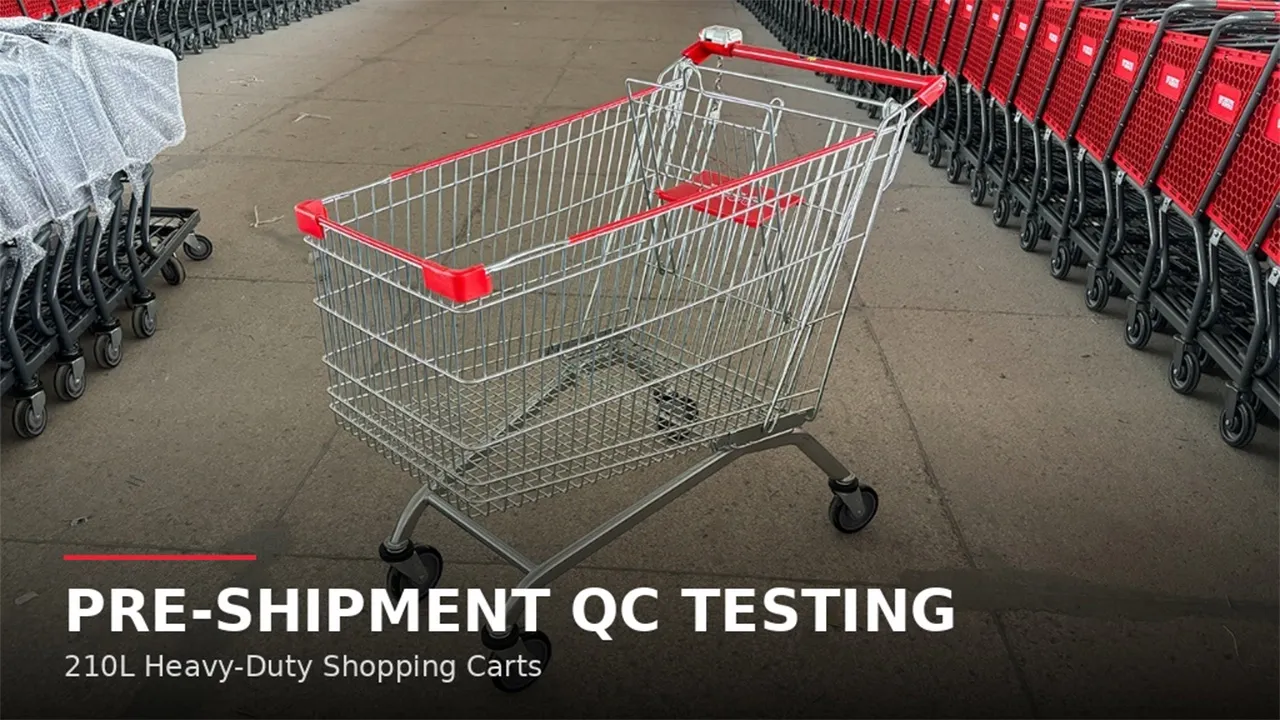
If a supermarket is ordering a fleet of 210L shopping carts, they are running a high-volume store. At that scale, you aren't just paying for basic metal and wheels. You need a rig that actually survives getting overloaded with bulk groceries and repeatedly rammed into cart corrals by floor staff. The daily wear and tear on these units is absolutely brutal.
If the frame is weak or the casters fail under load, the store's operations take a hit. That is why we don't just build them and ship them. Every batch goes through a strict physical QC and load-testing process before a single unit gets loaded into the shipping container.
Here is exactly how we test our 210L shopping carts before dispatch.
1. Visual Inspection and Baseline Specs
First, we pull random samples from the production run to check the overall finish. For these 210L units, we are looking for a flawless zinc plating finish and tightly fitted red plastic bumper guards.
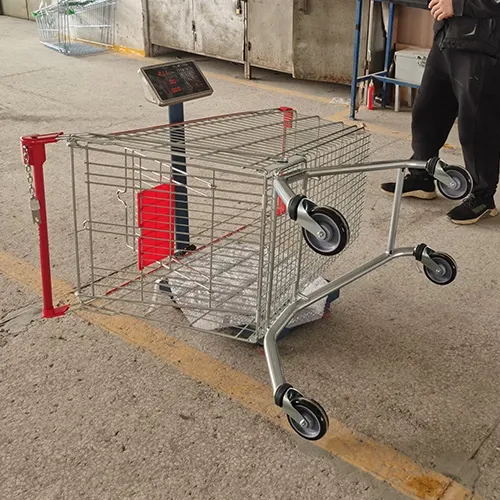
We don't guess the weight; we check it. We lay the finished cart on a heavy-duty floor scale to verify the net weight. If the weight drops below our engineered specs, it means the materials were compromised. Our carts always hit the required weight threshold.
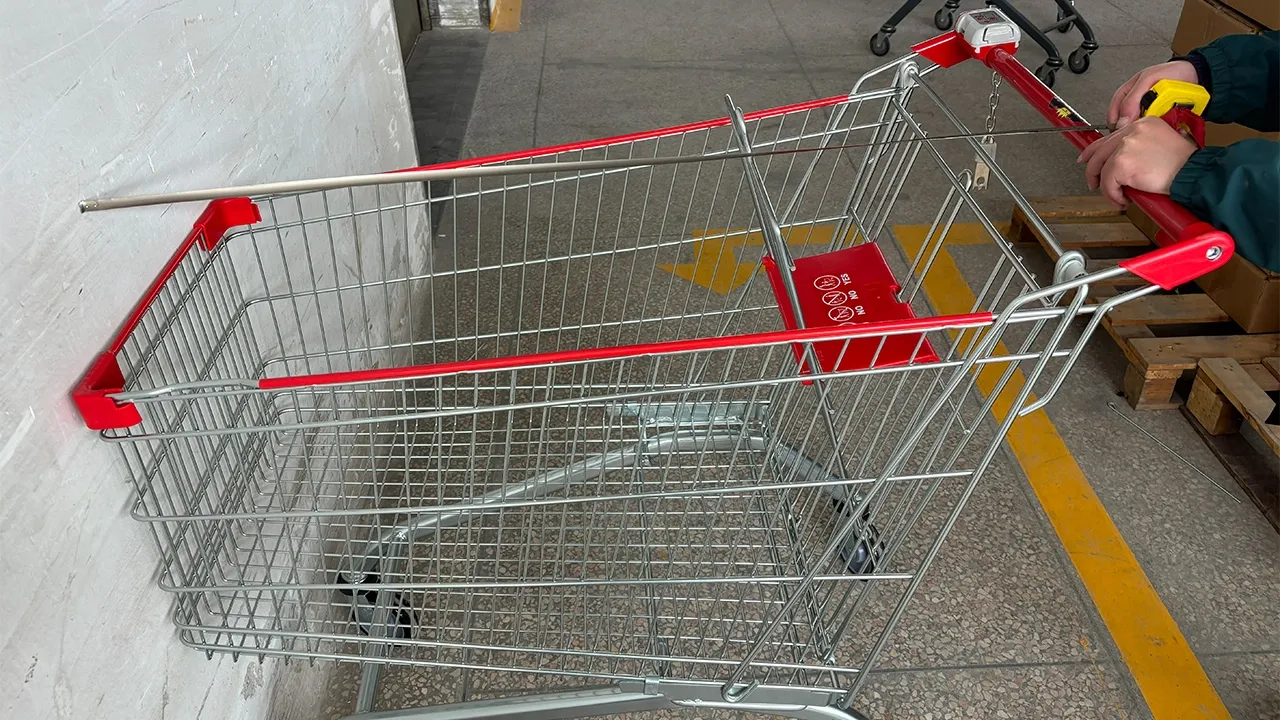
Next, we run a tape measure across the primary dimensions—basket length, chassis width, and handle height. The geometry has to be perfect, otherwise, these carts won't nest smoothly with the existing fleet at the customer's store.
2. Material Verification
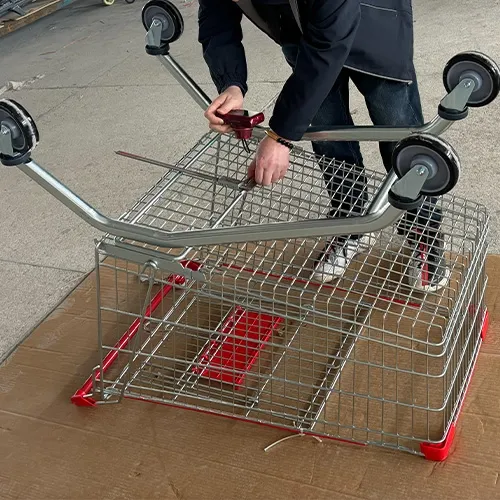
We do not cut corners on raw materials. Our QC team uses digital calipers to physically measure the wire diameter of the basket grid and the steel tube thickness of the base chassis. We make sure the steel gauge matches exactly what we promised in the contract. Thicker steel means a longer lifespan on the retail floor.
3. Real-World Load & Deflection Testing
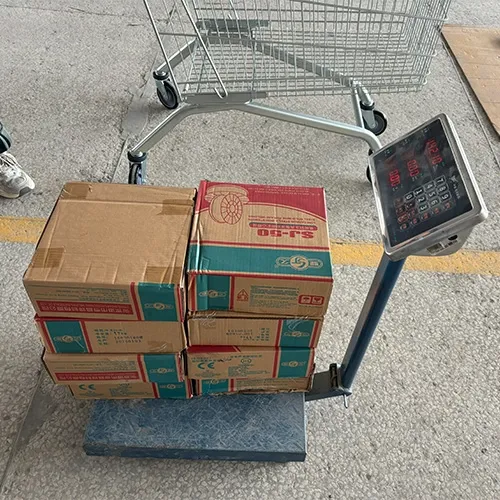
To test the load capacity, we don't use arbitrary sandbags. We weigh actual boxes of heavy steel welding wire on a scale to prepare a precise, heavy testing load.
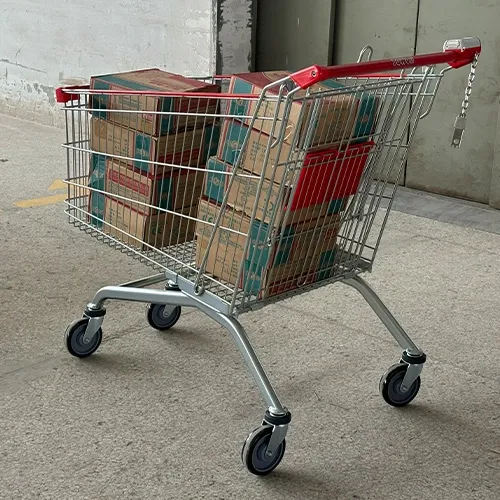
Once we have the exact weight, we load the 210L basket to its maximum capacity. We then physically push the cart across the factory floor to ensure the casters roll smoothly without binding, and the tubular chassis does not bow under the extreme weight.

The baby seat is a critical safety component. We load a concentrated heavy box directly onto the folding child seat to test the structural integrity of the hinges, wire mesh, and backrest. If the seat sags or the hinges bend under the pressure, it's an instant fail. We ensure the seat can safely and easily handle the weight without compromising the frame.
4. Hardware and Abuse Testing
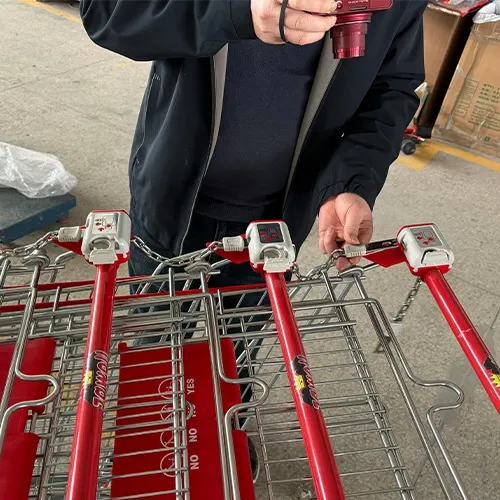
For fleets utilizing coin deposit systems, functionality is everything. We nest a row of carts and physically test the coin lock mechanisms, ensuring the keys engage and release smoothly without jamming.
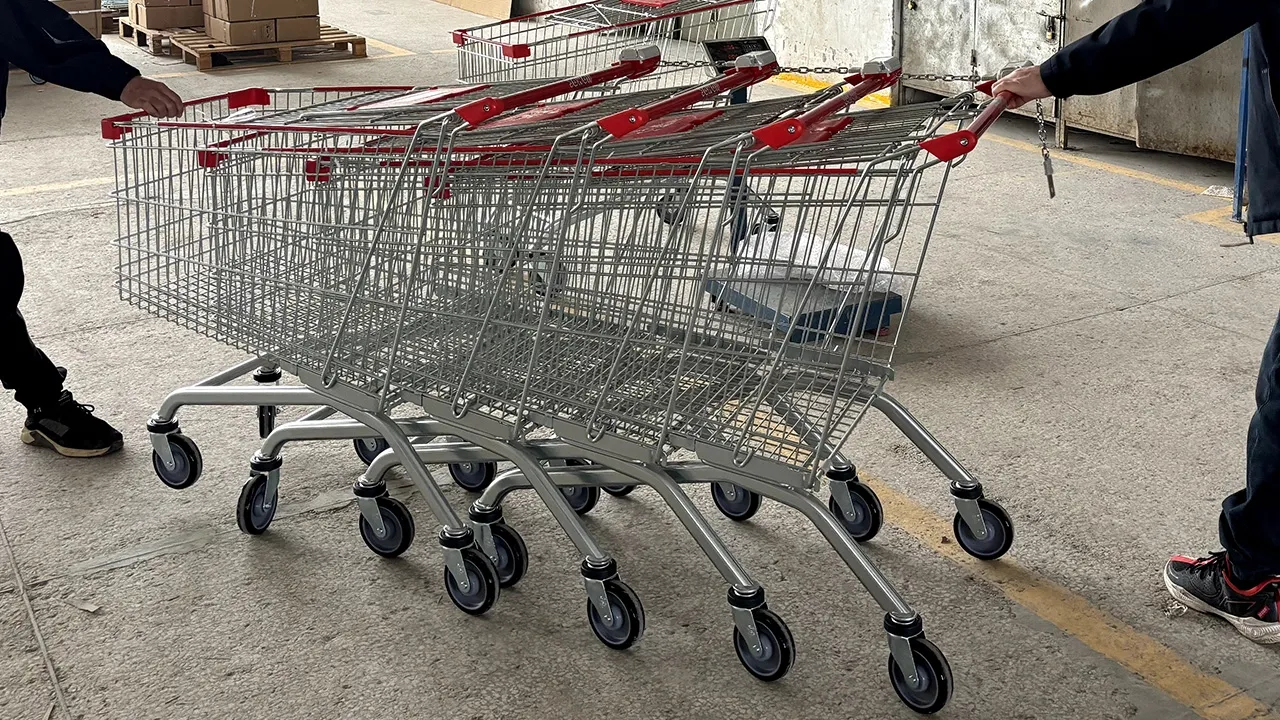
Then comes the abuse test. We have two floor workers grab nested carts and aggressively pull them in opposite directions. This tension test proves that the chains and lock housings won't snap when customers yank them on the shop floor.
5. Final Wrap and Container Loading
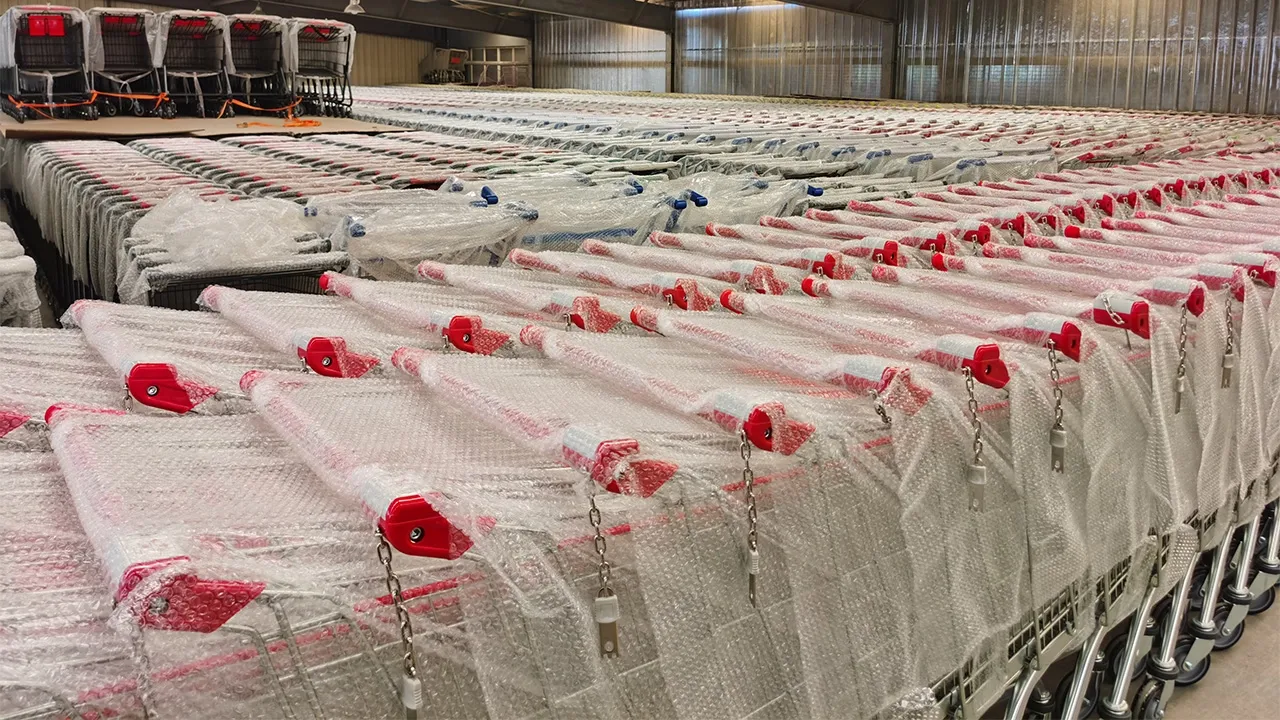
Once a batch passes all structural and functional tests, they move to the packing area. We wrap the handle mechanisms, coin locks, and critical contact points in heavy-duty bubble wrap. The carts are tightly nested in deep rows, ready to be strapped down and loaded into the shipping containers without risking transit damage.
A cheap cart might look fine in a photo, but it will fall apart in six months. We build retail equipment designed to last, and our testing process proves it.