Jul 3, 2026Customer Case
From Concept to Floor: Engineering a Custom Pallet Display Stand
See how we take a retail display concept from an initial idea, through 3D structural design and prototyping, to a final powder-coated manufacturing run.
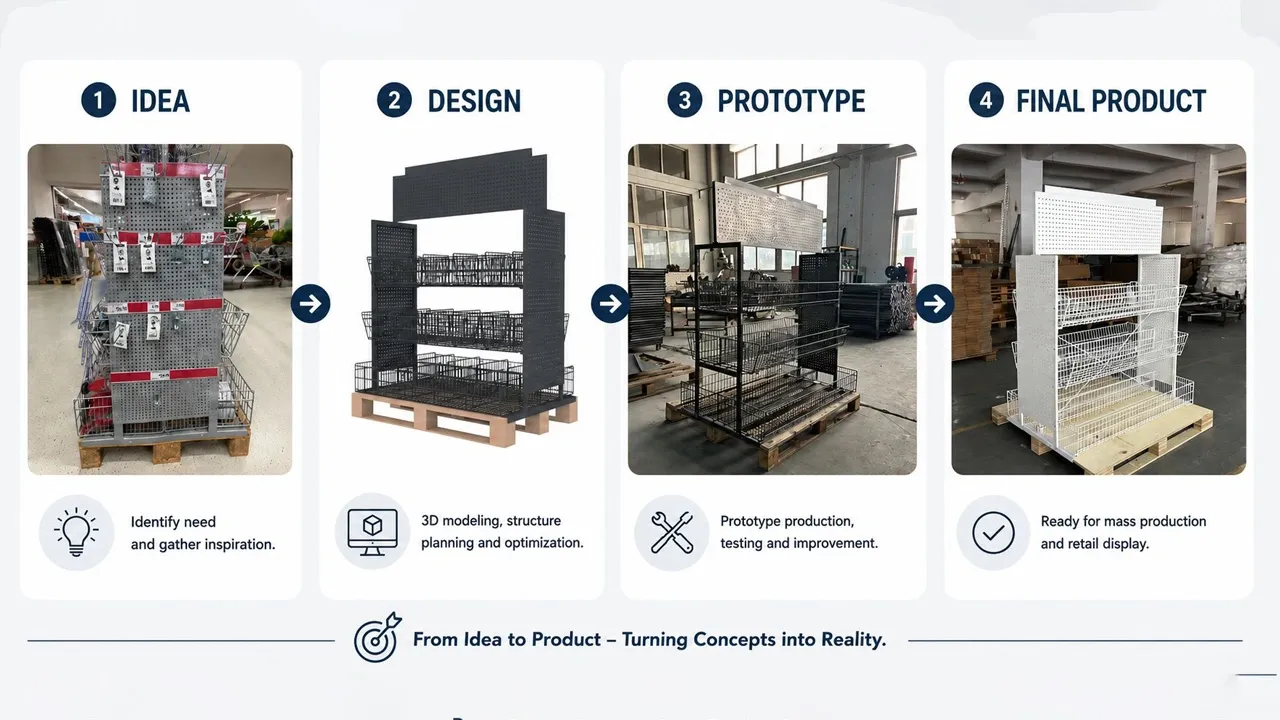
Bringing a new retail fixture to life isn't just about making it look good on a screen. It has to hold serious weight, survive the shop floor, and actually be manufacturable at scale without blowing out the budget.
We recently took a modular pallet display from a rough concept all the way to a finished, powder-coated unit. If you are looking for a manufacturing partner who understands retail structural design, here is a look behind the curtain at how we engineer custom shopfitting solutions.
1. The Brief and Structural Planning
The brief for this build was straightforward but demanding. We needed to engineer a massive, multi-level merchandising rack that could be forklifted directly onto the shop floor using a standard timber pallet base.
We couldn't just build a standard rack. It needed to handle bulk dumping for loose goods on the lower tiers, while offering flexible hanging space for packaged inventory on the top.
2. 3D Modeling and Engineering
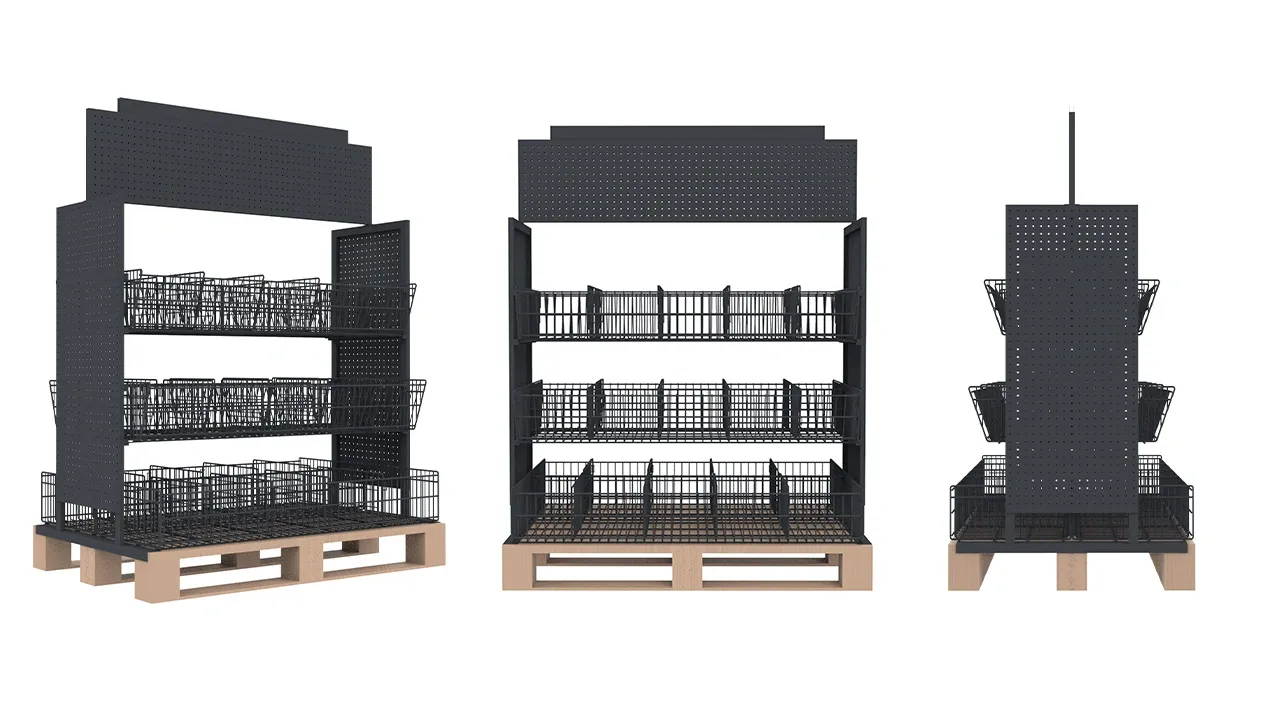
Before we cut a single piece of steel in the factory, our engineering team modeled the entire unit in 3D.
As you can see in the renders below, we designed a robust central frame featuring a double-sided pegboard backer. We integrated three tiers of heavy-gauge wire baskets on both sides. The key engineering challenge here was ensuring the wire grid is thick enough to hold heavy stock—like hardware or bulk groceries—without bowing, while keeping the compartment dividers completely adjustable for the store staff.
3. Prototyping and Factory Testing
A 3D model means nothing if it doesn't work in the real world. This is where the physical engineering gets tested.
We welded up the first physical prototype (the raw black steel frame you see in the timeline) to check all the manufacturing tolerances. The main frame has to lock together perfectly square, and the wire baskets need to drop into their slots without binding. We check the weld penetration, load-test the baskets, and ensure the entire rig is completely stable on the wooden pallet base before it goes anywhere near the powder coating line.
4. The Final Retail-Ready Product
After passing the structural tests, the unit gets hit with a tough powder-coat finish. For this run, we used a clean, high-gloss white to ensure the fixture doesn't distract from the actual merchandise.
What started as a basic reference photo is now a fully functional, modular fixture ready to be packed flat and shipped out for a store rollout.
Good display solutions do more than just hold boxes. A solid display rig has to survive getting battered by shopping carts while keeping the daily restock process as fast as possible. Stop relying on suppliers who just copy pictures. If you want to turn a rough sketch into a high-volume retail fixture, you need to work with a team that actually knows how to build it.