Aug 31, 2026Customer Case
Factory QC Guide: Pre-Shipment Inspection for 300kg Stocking Carts
See our exact factory QC process for 1200x530x1005mm heavy-duty stocking carts. We test 300kg dynamic loads, 5-inch PU casters, and structural integrity before shipping.
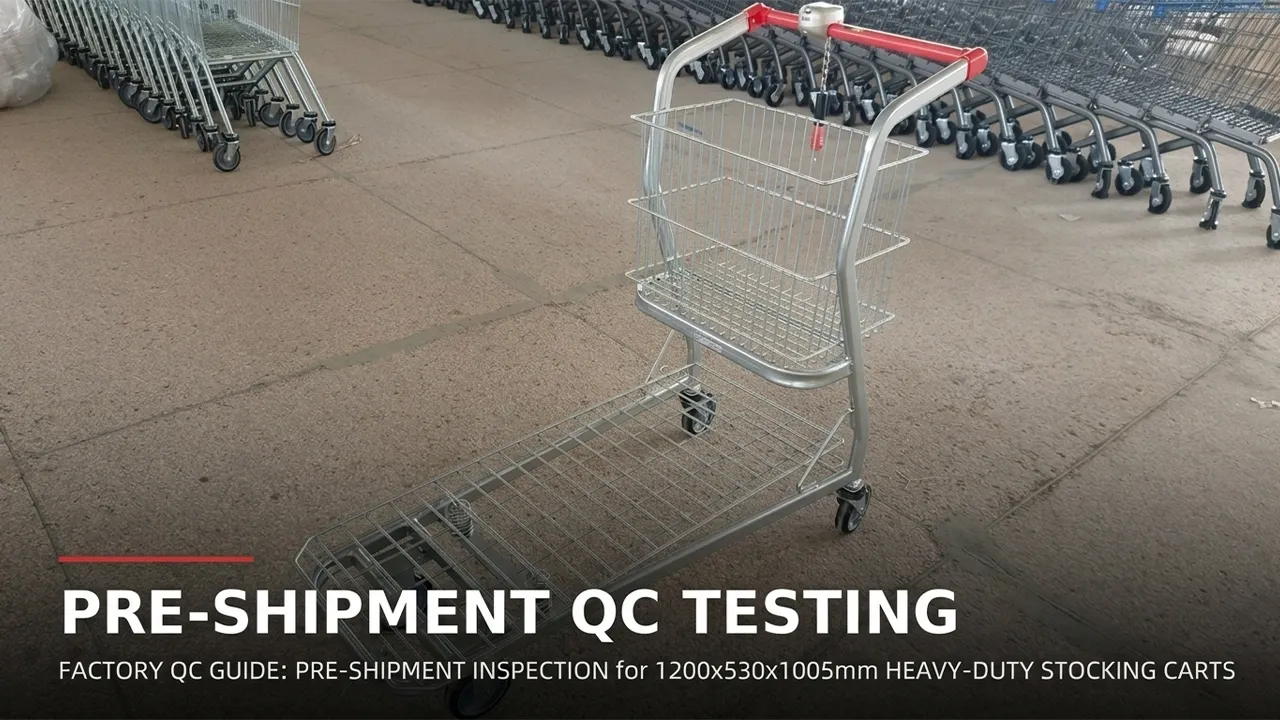
When you are supplying retail warehouses and cash-and-carry stores, equipment failure is not an option. Stocking carts handle more than just boxes. They keep store operations moving. Jammed casters or a bending chassis directly hit a retailer's bottom line with wasted time.
At our factory, we do not ship on assumptions. We run a tight QC process right here on the factory floor. Nothing gets near a shipping container without passing inspection. Here is a look over my team's shoulder as they check a run of our 1200x530x1005mm heavy-duty stocking carts.
1. Baseline Specs & Visual Check
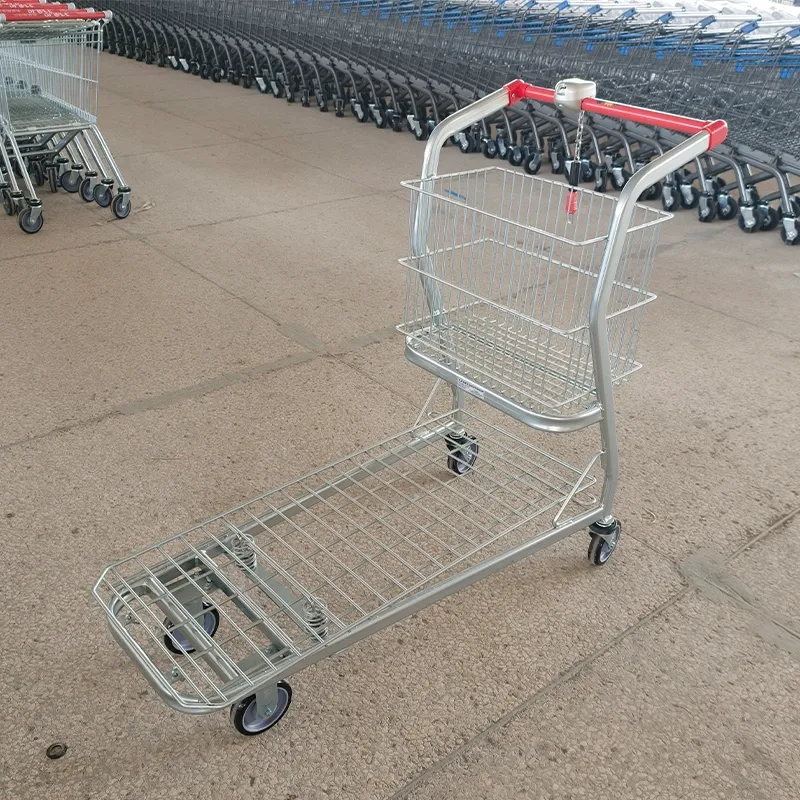
We pull random units straight off the production line to start the teardown. We start by looking the whole thing over. The guys check the zinc plating and the clear powder coat. A tiny scratch means rust later, so that seal needs to be flawless.
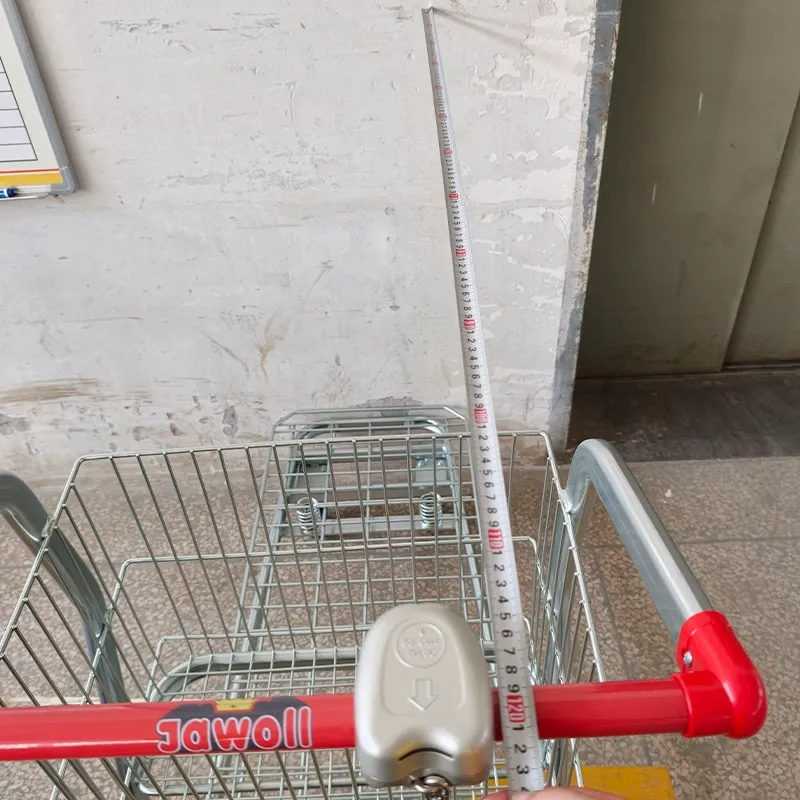
Then we grab the tape measure. We verify the external dimensions directly against the engineering drawings. The specs call for 1200mm long, 530mm wide, and 1005mm high. We don't do "close enough." If these carts don't nest smoothly together in a busy stockroom, the client has a problem.
2. Tare Weight Verification
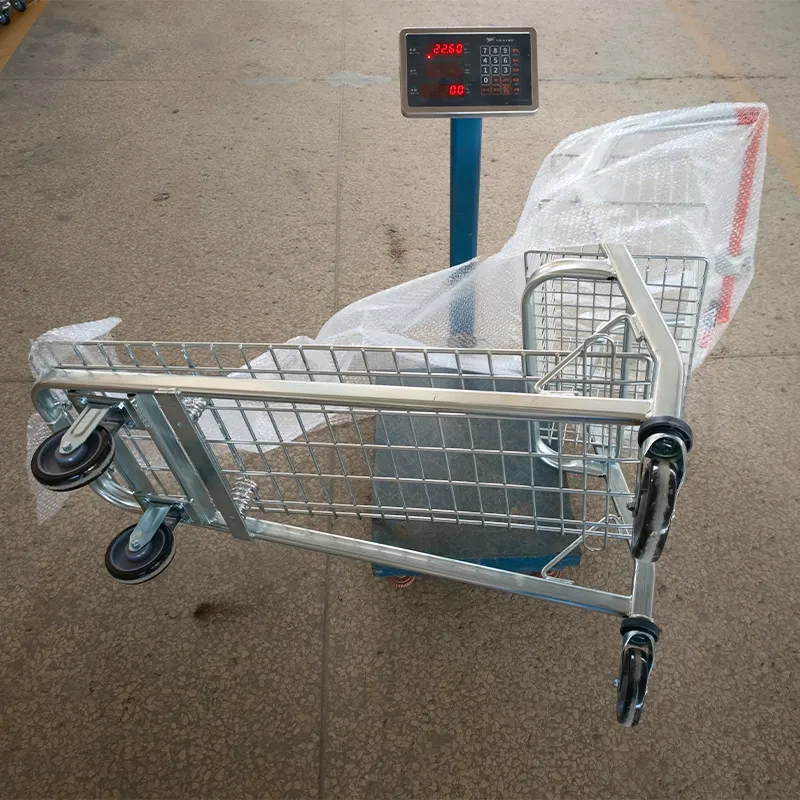
You can tell a lot about the steel gauge just by throwing the cart on a scale. We wrap the cart to protect the finish and drop it on our digital platform scale. This bare unit hits 22.60kg. That is heavy-duty tubular steel doing its job. A lighter cart might save on ocean freight, but it will warp the second a store clerk overloads it. We don't cut corners on raw materials.
3. The 300kg Dynamic Load Test
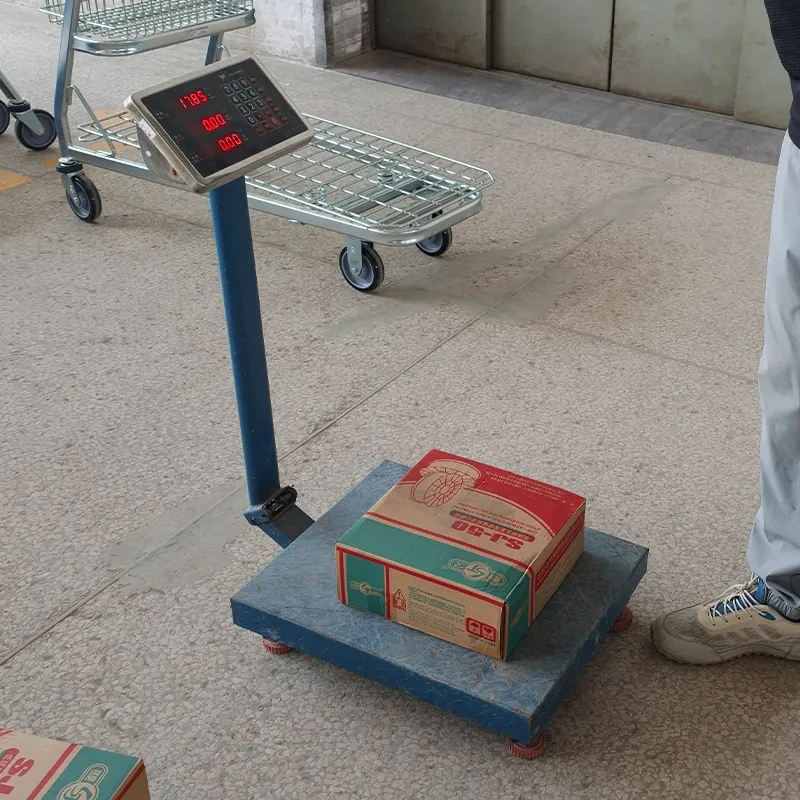
Static load limits are fine for brochures, but the real world moves. We rate these stocking carts for a 300kg dynamic load. To test this accurately, we first calibrate our test weights. We put our standard hardware boxes on the scale—clocking in at 17.85kg each.
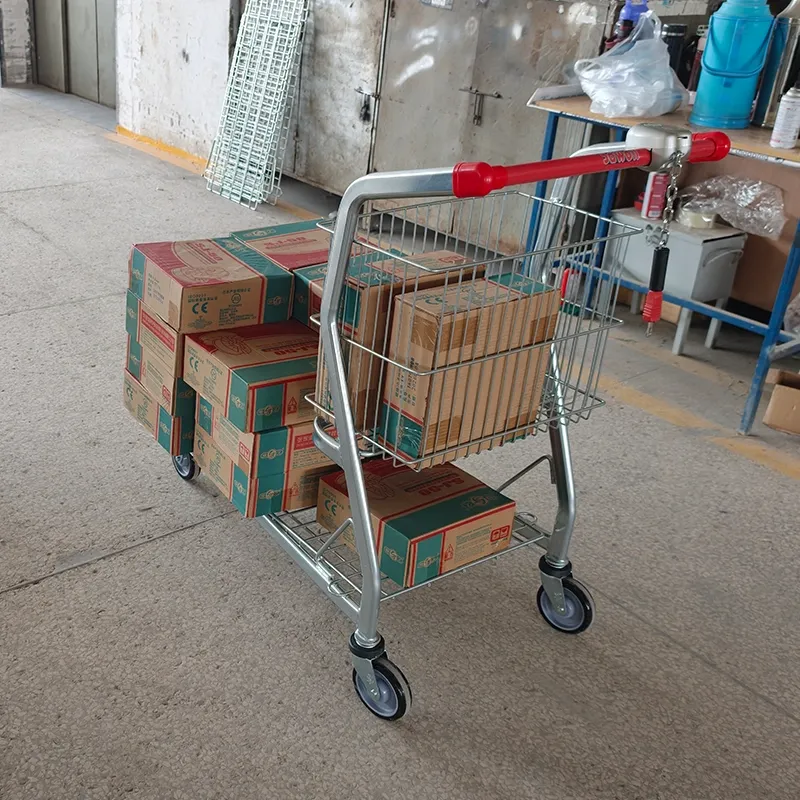
We stack the platform and the upper basket to simulate a worst-case retail scenario, pushing the weight right up to that 300kg threshold. Then, we move it. We push the loaded cart aggressively across the rough concrete factory floor to check for frame flex, vibration, and handling stability. If the cart feels sluggish or the chassis groans, it fails. This batch passed smoothly.
4. Hardware & Undercarriage Inspection
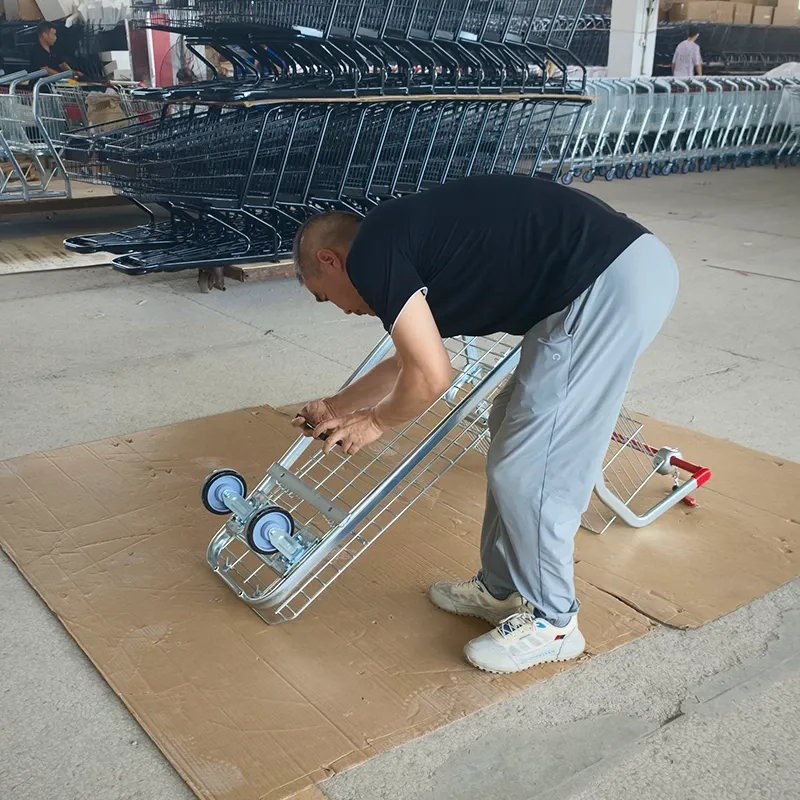
You cannot properly QC a cart while standing up. The crew gets down on the floor to inspect the undercarriage. We check the wire mesh welds, the spring-loaded nesting mechanism, and the bolt torques on the caster mounting plates. The nesting springs must offer the exact right resistance—firm enough to hold the cart's shape, but easy enough for an employee to shove together.
5. Wheel Rotation & Material Check
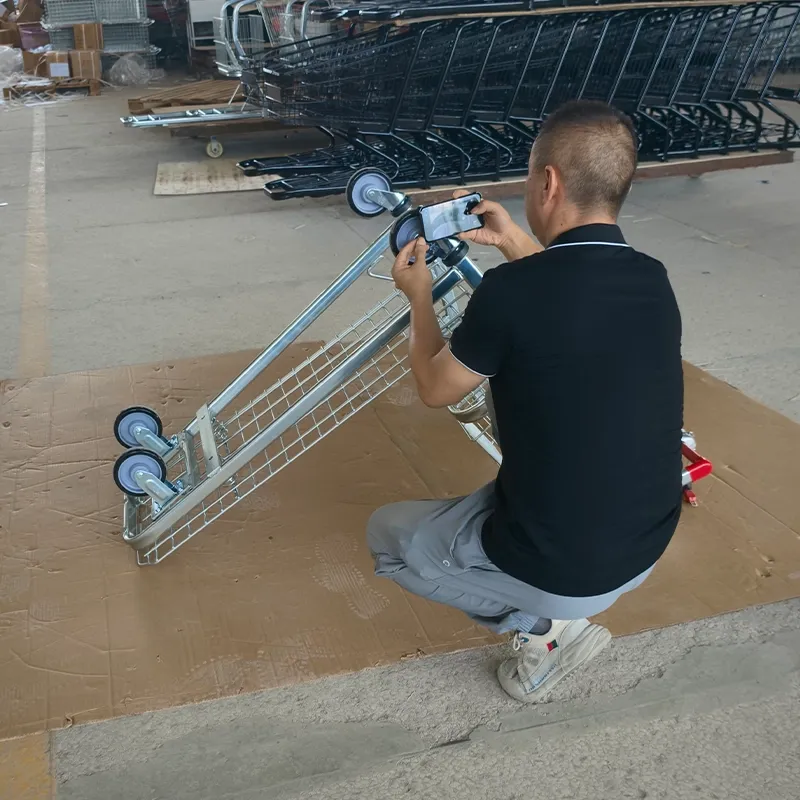
Wheels make or break the cart. We use solid 5-inch PU (Polyurethane) on this build. The setup isn't random. Fixed casters go on the front so you can push straight down an aisle without fighting it. The back gets double-bearing swivel casters so you can spin the cart in place. The guys spin every single wheel by hand to check the grease packing and listen for noise.
6. Coin Lock Functional Test
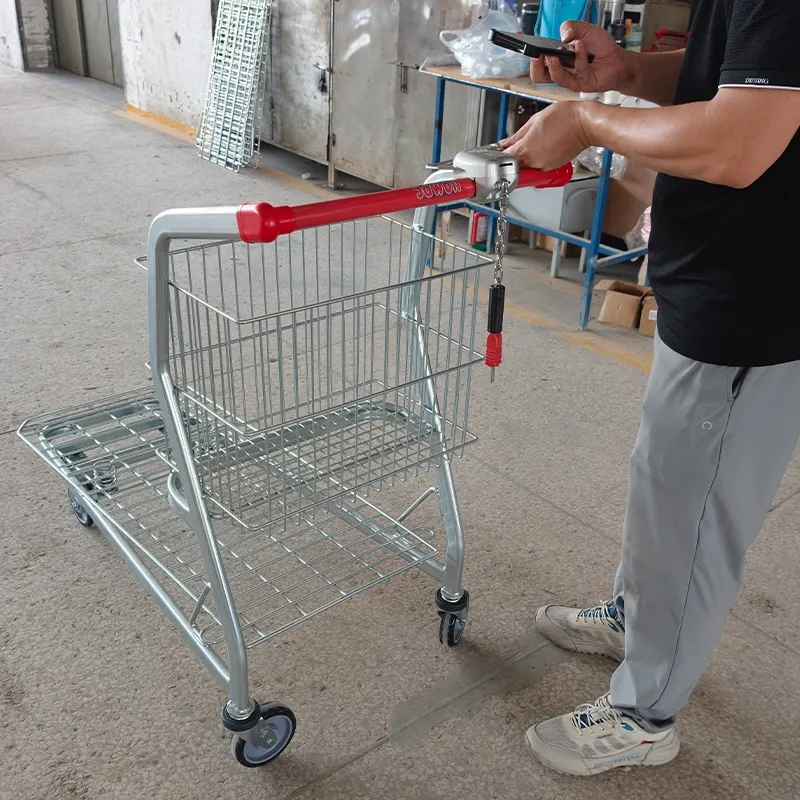
For supermarket and retail clients, cart retention is a massive operational issue. We test the integrated coin lock on the handle of every sample unit. The inspector inserts the test token, verifies that the release mechanism engages smoothly, and checks the chain tension. It needs to click into place decisively without jamming.
7. Custom OEM Assembly Details
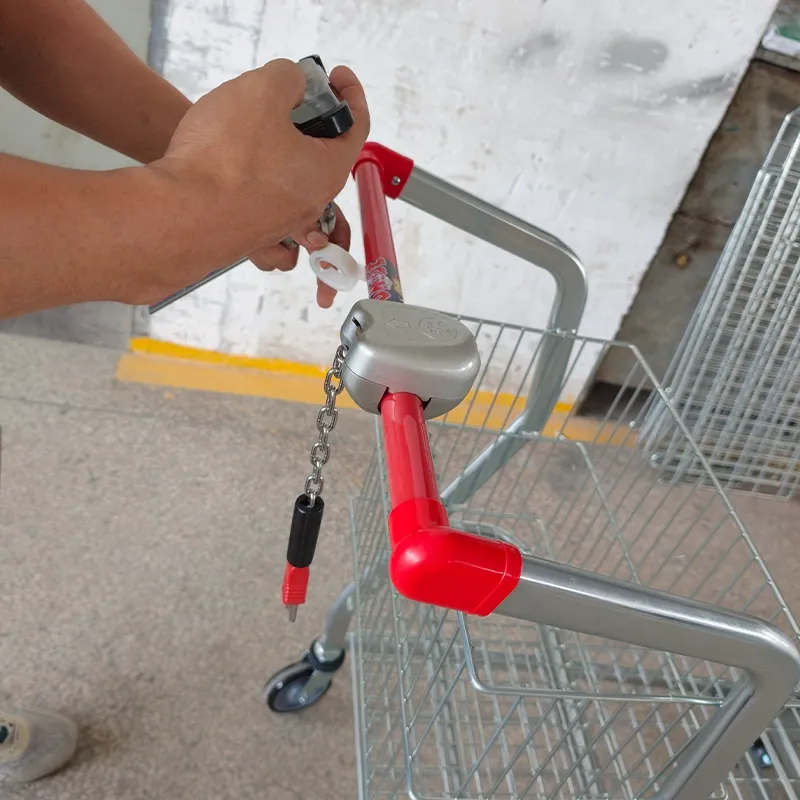
We check the custom handle components. While this specific client provided their own branded inserts (JAWOLL), our job is to ensure the integration is flawless. We check the end caps, the transparent PVC protective sleeve, and ensure the logo is perfectly centered and tightly sealed against moisture and daily wear.
8. Final Staging and Protective Packaging
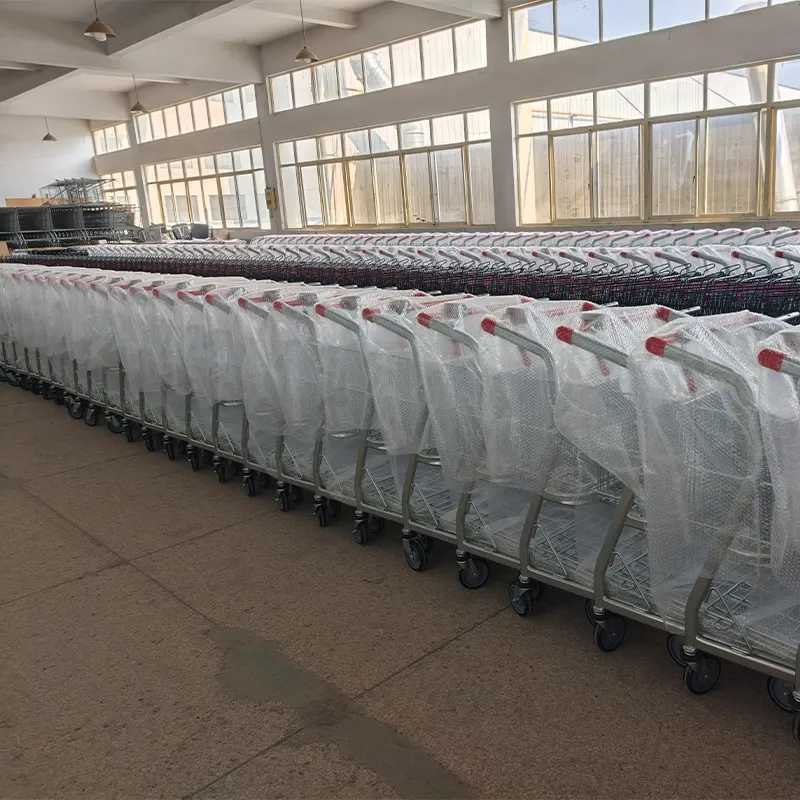
Once the QC tags are signed off, the batch moves to the packaging area. Nobody wants scratched carts showing up. We wrap the baskets with thick bubble wrap before they go anywhere. This stops the metal rubbing together out on the ocean. After nesting them tight, we do a final count against the manifest and line them up for the containers.