Jun 26, 2026Product Blogs
Built Tough: The Ultimate Guide to Fitting Out Your Hardware Store
Planning a hardware store fit-out? Flimsy shelves won't cut it. Read our expert guide on heavy-duty 4-post systems, AS 4084 safety, and organizing thousands of tools with slatwall.
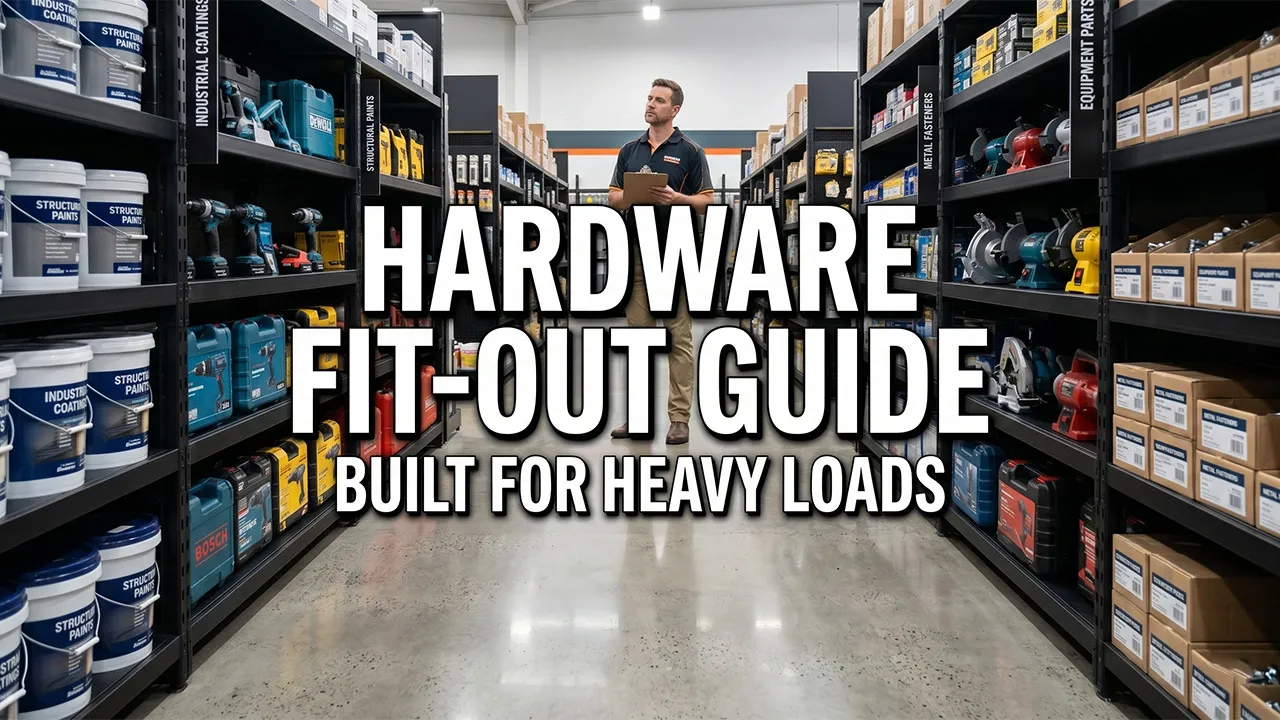
Building a hardware shop is its own unique nightmare compared to a standard grocery fit-out. Nobody is buying lightweight bags of chips here.
If you put cheap, flimsy metal racks in a hardware store, they won't just look bad—they will literally buckle and collapse under the weight. Your fit-out needs to be about one thing: Brute Engineering Strength.
At Suzhou Smart Shop Supplies Co., Ltd, we don't just supply metal; we engineer retail ecosystems that handle the brutal reality of industrial retail. This guide breaks down exactly how to fit out a hardware store that lasts, maximizes space, and keeps your customers safe.
1. Store Zoning & Layout: Flow for Heavy Goods
A hardware store layout must prioritize Structural Safety and Customer Flow. How customers move through your aisles matters when they are carrying heavy products.
Anti-Clockwise Traffic & Power Perimeter
Like most retail in Australia, shoppers tend to move anti-clockwise.
- The Smart Move: Put your highest-margin, visually appealing professional tools right at the start of that perimeter run. Get them feeling the quality early on, and they'll spend more as they move deeper into the store.
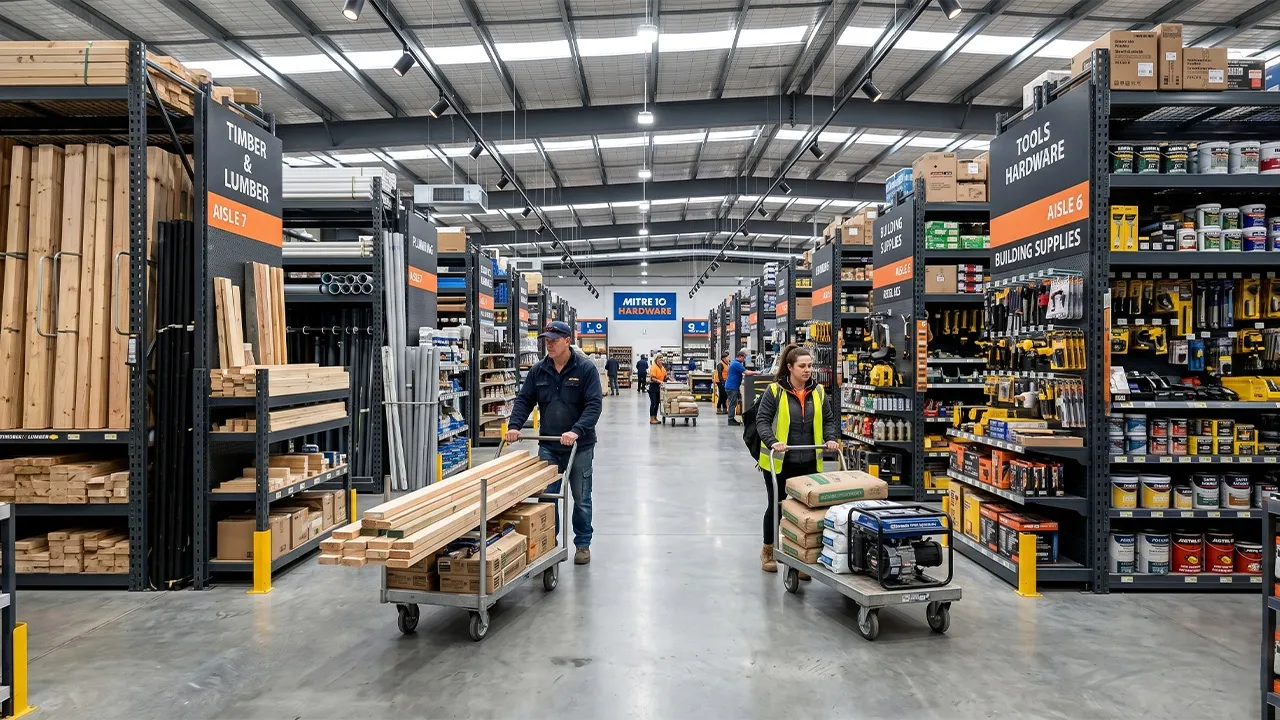
Main Aisles (The Flatbed Rule)
Say a bloke is hauling an air compressor down your main aisle. If someone coming the other way gets stuck, your floor plan has failed.
To fix this, space those main runs between 1.8 and 2.4 meters apart. Buyers are dragging massive flatbeds full of timber and cement through here. As a bonus, going wide means you automatically hit the required disability access codes.
2. Choosing the Right Shelving: The Heavy Duty 4-Post System
For a hardware store, The 4-Post Heavy Duty System is the gold standard.
Forget about standard gondolas for your main power tools or paint sections; they don't have the brute stability. 4-Post systems offer vastly superior stability and weight capacity because the load is distributed across four reinforced uprights.
Load Capacity (UDL)
When planning your shelving, you must know your products' weight profile. Standard shelving handles Uniformly Distributed Loads (UDL) of maybe 100-150kg. A proper 4-Post system is engineered for much, much more. Don't guess; engineer for your heaviest inventory.
Standard Australian Pitch Compatibility
If you are ordering shelving, make sure it matches the standard Australian pitch (usually 50mm). This is crucial. It means if you need aftermarket accessories like hooks, wire baskets, or fences later, they will actually fit. Don't get locked into a proprietary system.
3. Slatwall & Tool Display: Organizing the Chaos
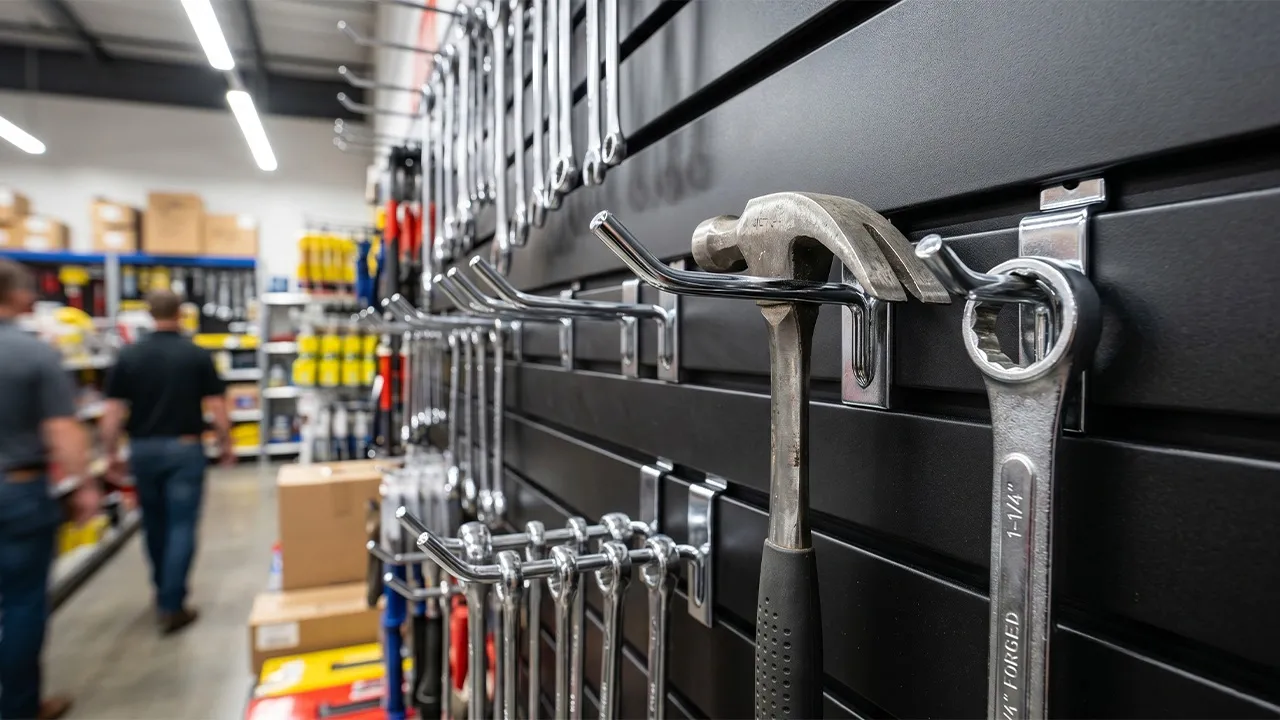
Think about the sheer volume of tiny, loose bits in a hardware shop. We're talking spanners, screwdrivers, random fasteners, and heavy hammers. Just chucking all that gear onto a flat shelf is a massive mistake. The place will look like a complete mess by lunchtime.
- Slatwall Panels: This is the key. They replace standard backing and give you unlimited hanging flexibility.
- The Engineering Detail: Pay attention to the hooks. And I mean proper slatwall hooks—standard pegboard stuff simply won't survive here. Go cheap, and the minute a tradie grabs a heavy tool off the wall, the hook comes crashing down with it. It’s an absolute headache. You need heavy-duty slatwall hooks that physically lock into the groove and refuse to budge.
4. Bulk Storage & Heavy Goods: Integrating Warehouse Racking
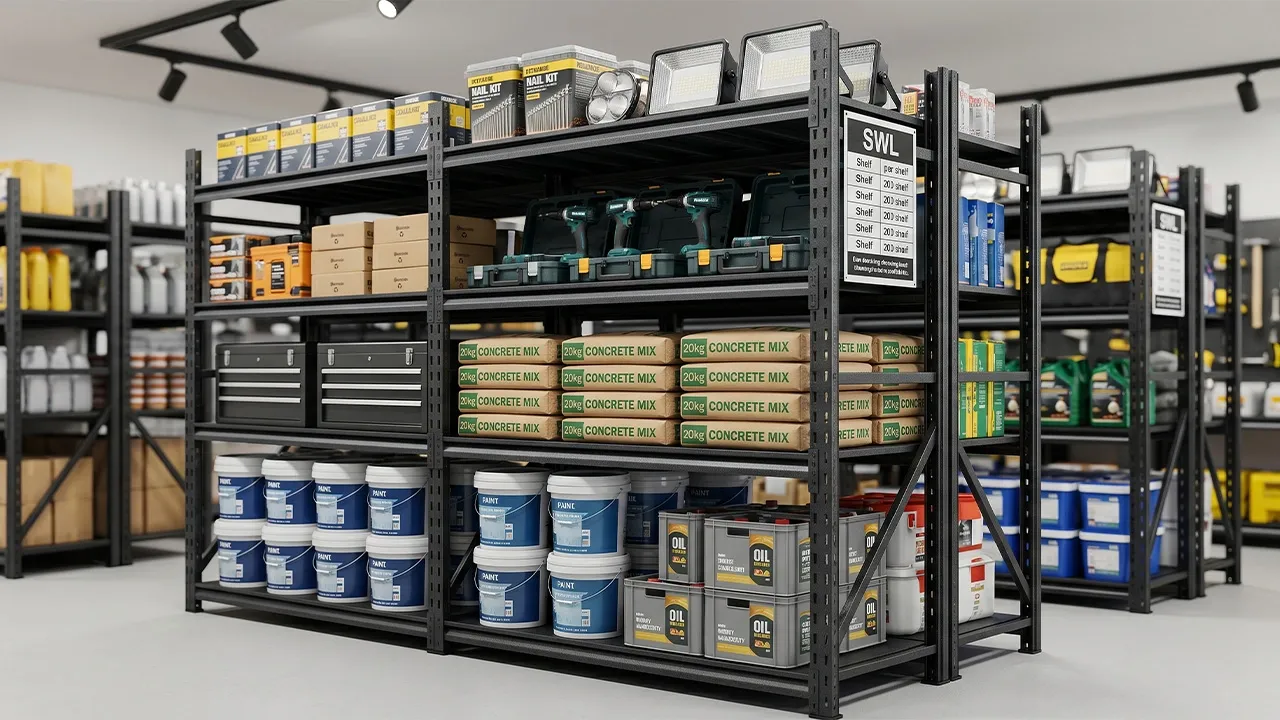
hardware stores carry a lot of oversized and awkward stock. Lumber, compressors, cement bags, and giant tool cases. Standard retail shelves cannot hold this type of volume or weight.
- Warehouse Racking: For bulky back-stock or very heavy items displayed right on the shop floor, you must integrate industrial-grade warehouse racking. This provides the necessary safety factor for bulk storage.
- Retailing Garage Shelves: Don't forget that Garage Shelves (garage shelves, specified here) are themselves a guaranteed winner in hardware retail. Retailing robust, durable storage solutions for workshops and home organization is a guaranteed high-margin seller for your core customer.
5. Moving the Iron: Shopping Carts and Flatbeds
Don't forget how your customers actually shop. If a guy is buying an air compressor and 4 gallons of paint, a cheap plastic basket won't cut it. Equip your store with durable Metal Shopping Carts that have large capacities. For bulk goods sections, heavy-duty flatbed trolleys are non-negotiable.
Compliance & Safety: AS 4084 Standards
In Australia, safety is not optional. When installing heavy-duty racking, you have to follow AS 4084 Standards.
This is the Australian Standard for steel storage racking. It ensures Proper Engineering, regular inspections, and Safe Working Load (SWL) signs on every aisle. Regulators take racking safety very seriously in retail environments to prevent collapses. We engineer our heavy-duty systems with these standards in mind.
Stop Guessing. Get a Fast Quote Today.
Look, setting up a hardware joint costs serious money. It makes zero sense to risk all that expensive stock (and everyone's safety) just to save a few bucks on weak steel.
Send your floor plan over to us. Our engineering guys will take a look, do all the boring math for the 4-Post bays and racking, and figure out the exact setup. From there, we’ll shoot you a rock-solid DDP quote (fully landed to your door in Australia) in about an hour.
Time to get your shop sorted.