Aug 3, 2026Customer Case
40HQ Container Loading Protocol: Packing 210L Shopping Carts
See our exact step-by-step process for loading 210L heavy-duty shopping carts into a 40HQ container, ensuring zero transit damage and maximum freight efficiency.
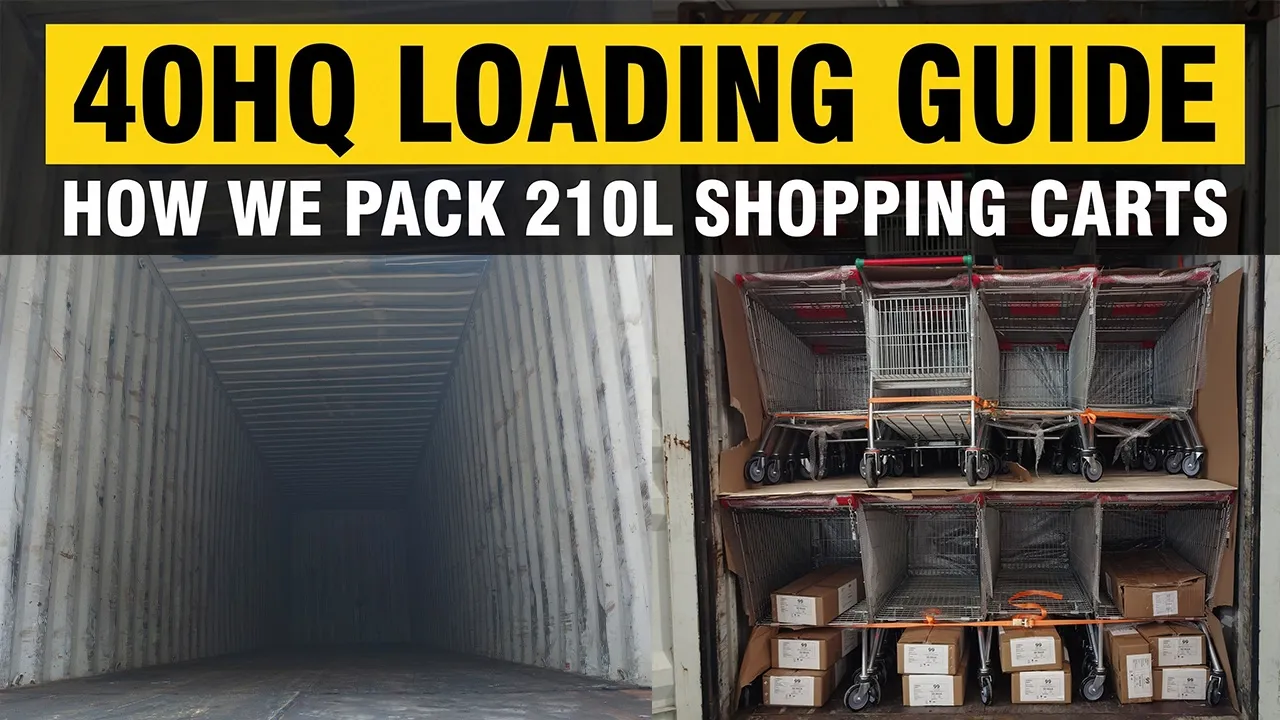
Making a solid 210L cart is one thing, but getting it across the ocean safely is another beast entirely. Mess up the container loading, and you're looking at scratched zinc plating, bent frames, and paying for dead air inside the box. In the shopfitting industry, ocean freight efficiency is money.
We do not leave loading to chance. So, let's break down exactly how my crew packs a 40HQ container out on the factory floor.
1. Baseline Weigh-In
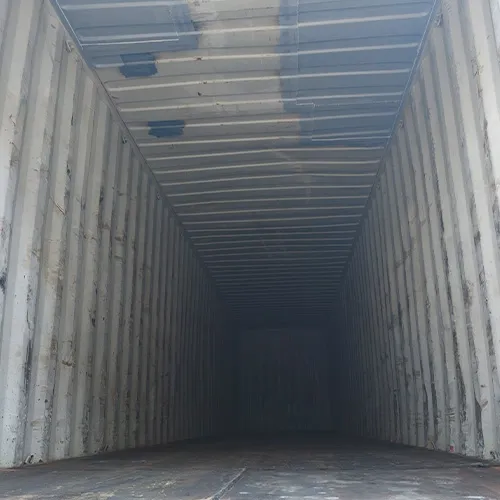
We don't rely on blind estimates. Before a single cart goes in, the empty 40HQ container hits our weighbridge. Getting the exact tare weight of the empty container is critical for accurate customs documentation and safe transport.
2. Securing the Base Layer
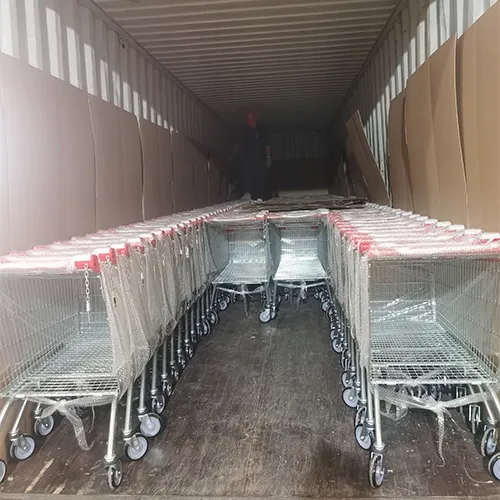
We start by loading the first layer of tightly nested 210L carts. To prevent metal-on-metal friction against the corrugated container walls during rough ocean transits, we line both sides with heavy-duty cardboard. This protects the surface finish of the carts.
3. Building the Intermediate Deck
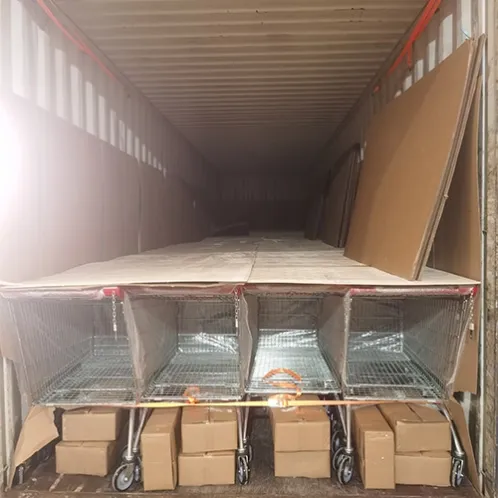
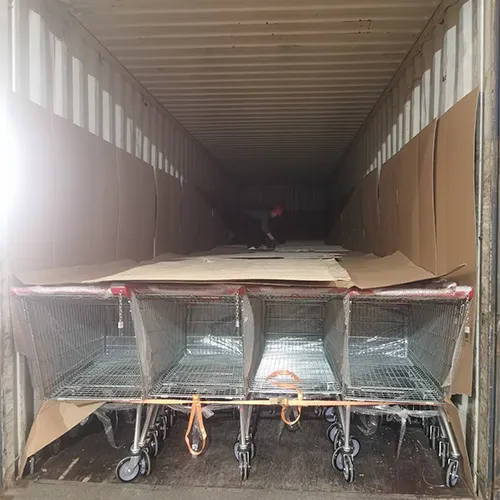
After that bottom row is totally dialed in, we crank it down with heavy orange tie-down straps. Nothing moves.
You can't just dump the next level of carts straight on top, or you'll crush the bottom baskets. We have to build a floor. We throw down thick cardboard first, then lay solid plywood sheets right over it. We also slide additional cardboard along the upper sidewalls. This creates a solid, flat deck that distributes the load of the upper tiers evenly.
4. The Simultaneous Push-and-Stack Technique
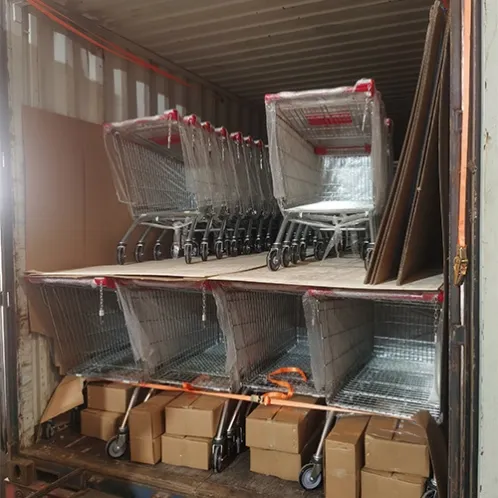
The second and third layers require a specific factory technique. Because vertical clearance is extremely tight in a 40HQ, the second layer is pushed in upright while the third layer is laid sideways directly on top of it.
The crew actually has to load the second and third rows together at the exact same time. Shove that middle row all the way back first, and you'll find out the hard way there's zero roof clearance to angle the top carts in. It takes two guys working in sync.
5. Maximizing Dead Space with Accessories
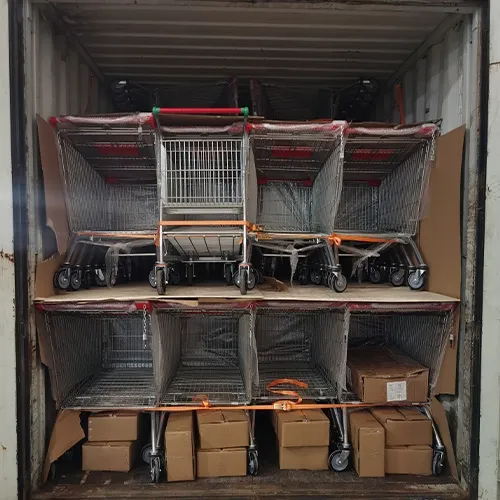
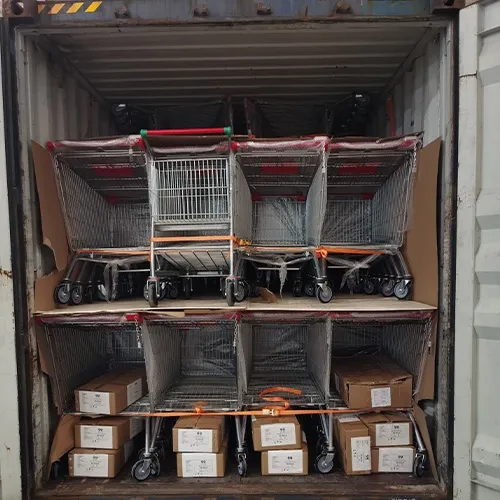
We do not ship empty air. With the top tiers secured, we utilize the empty cavity beneath the base layer of carts. Boxed accessories and spare parts—each clearly labeled with standard shipping marks—are tightly packed under the chassis. This ensures zero wasted space and prevents the main load from shifting backward.
6. Final Lock and Gross Weight Verification
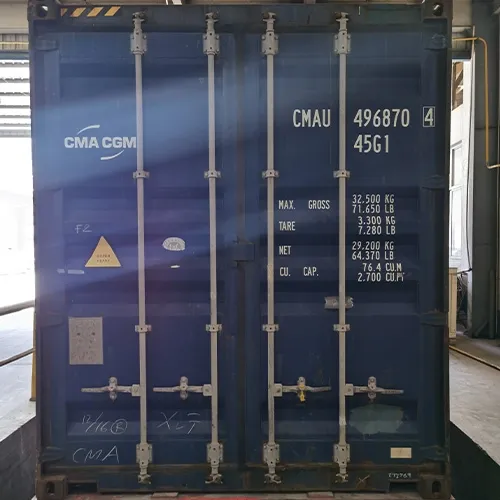
Once the container is packed to the doors, it is sealed and locked. Finally, the truck drives back over our factory weighbridge. We verify the final gross weight against our production data to guarantee absolute accuracy before it is dispatched to the port.